Algorithm
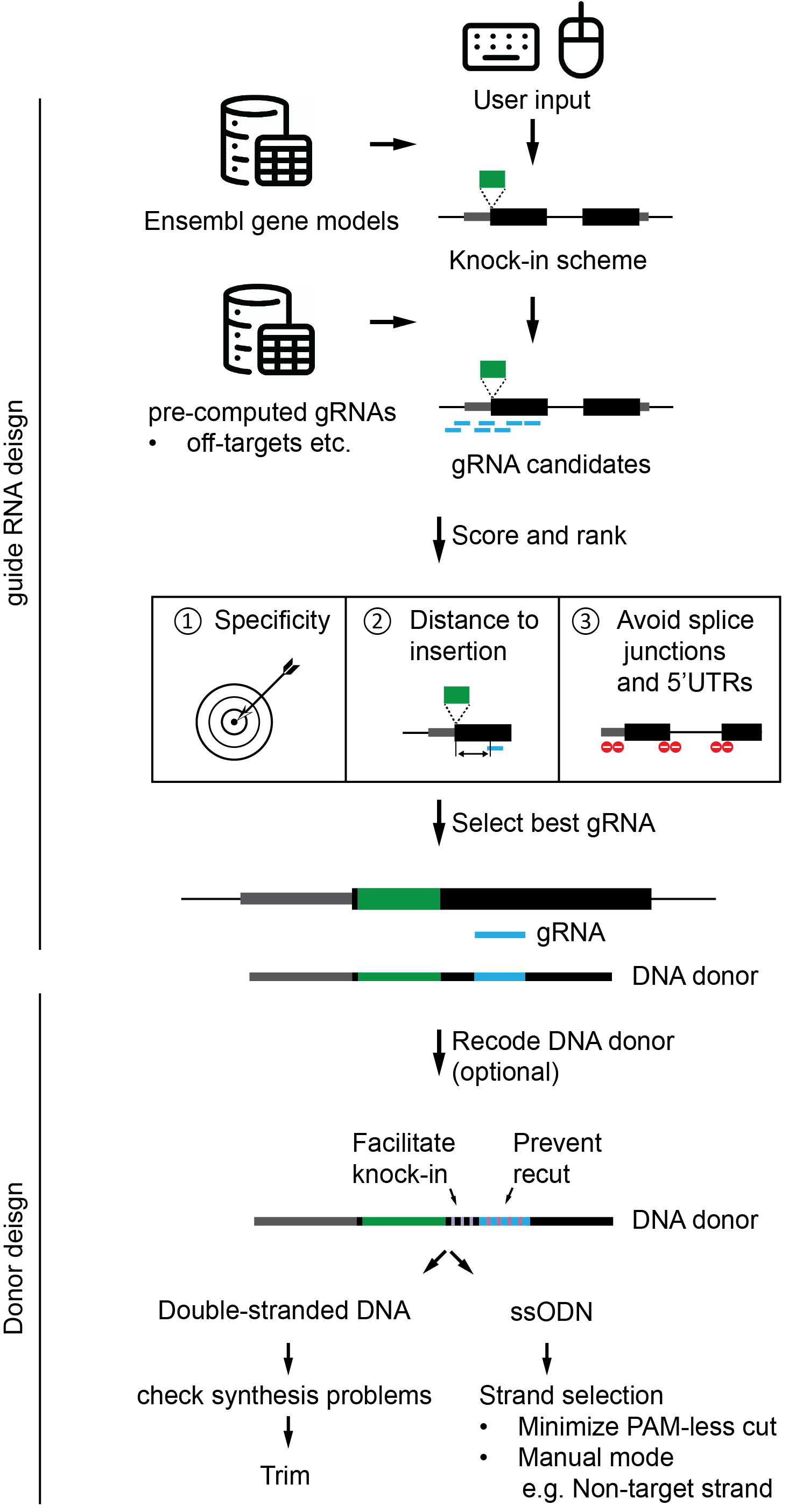
Overview
gRNA scoring
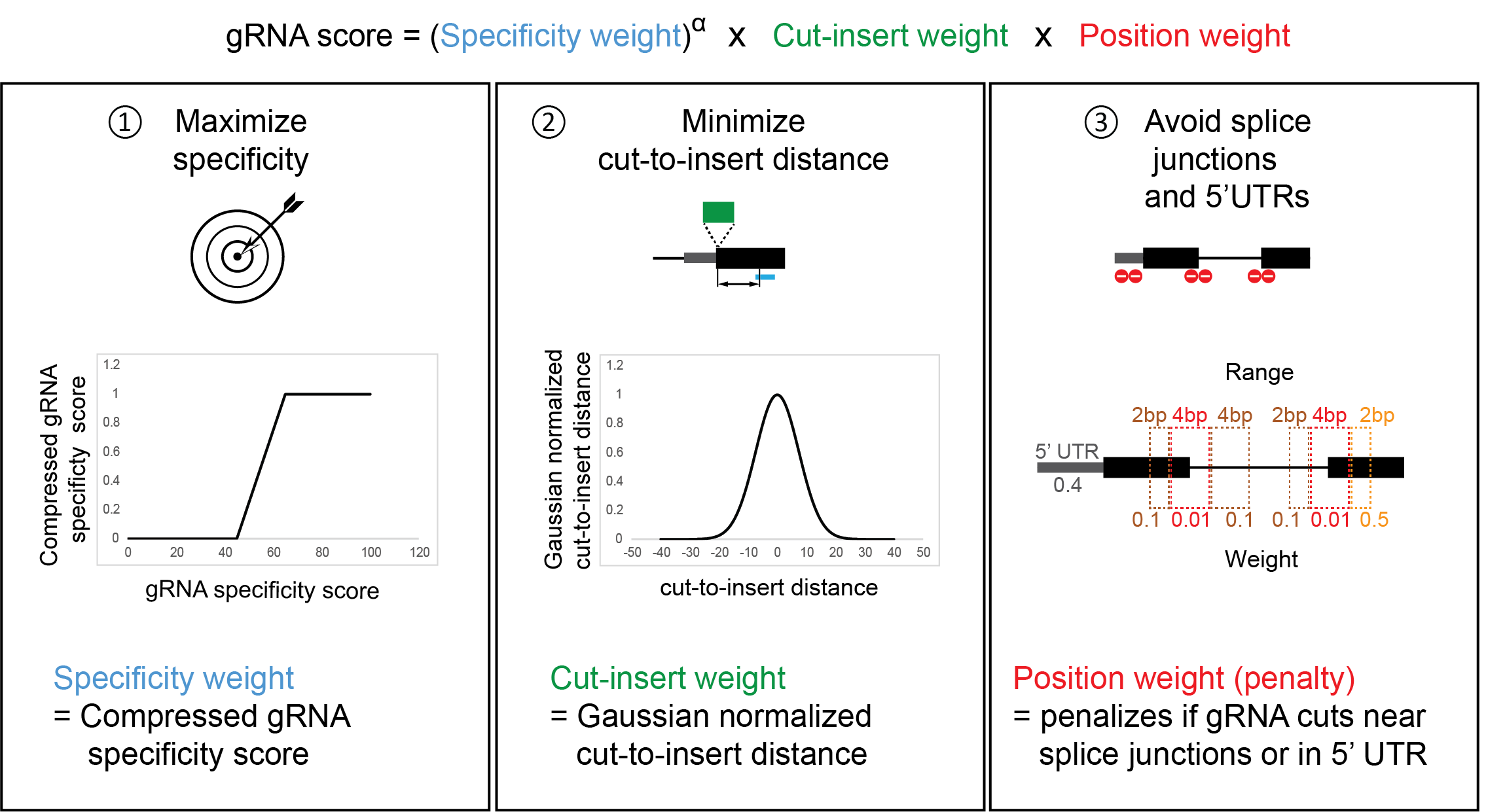
The gRNAs score is computed from three weights that aim to (1) maximize specificity, (2) minimize cut-to-insert distance and (3) avoid cutting near splice junctions and in 5’ UTRs.
Notes:
The gRNA specificity score is calculated in three steps:
(1) Identify all possible off-target hits of a gRNA in the genome with BWA.
(2) Calculate the off-target MIT guide specificity score for each off-target hit.
(3) Take the sum of all MIT scores and use formula 100/(100+sum(mitScores)) to calculate the gRNA specificity score.
Recoding strategy
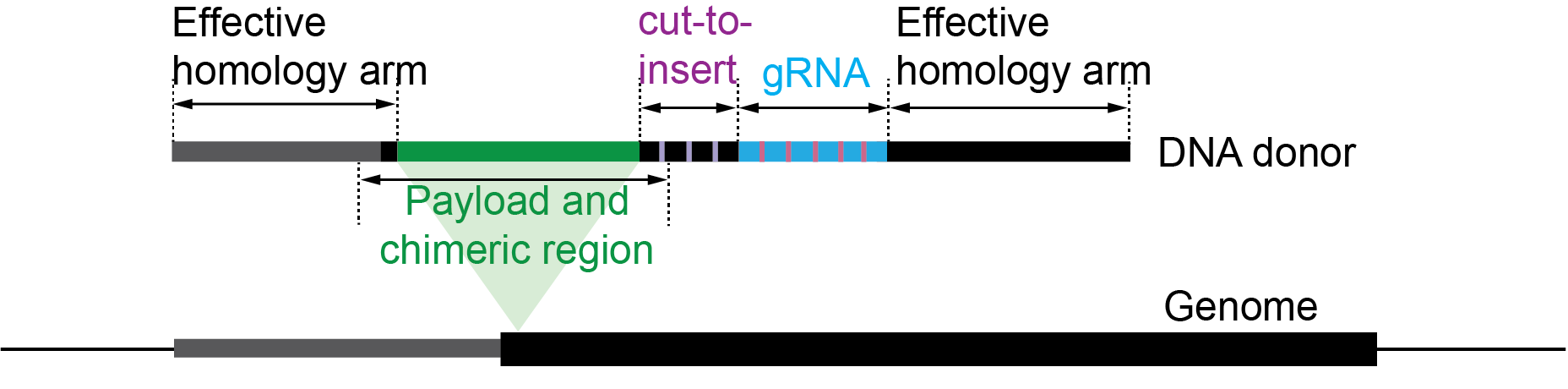
Silent mutations are included in the DNA donor to:
- Prevent recutting the genome after editing.
- Facilitate payload insertion when the cut-to-insert distance is inevitably large.
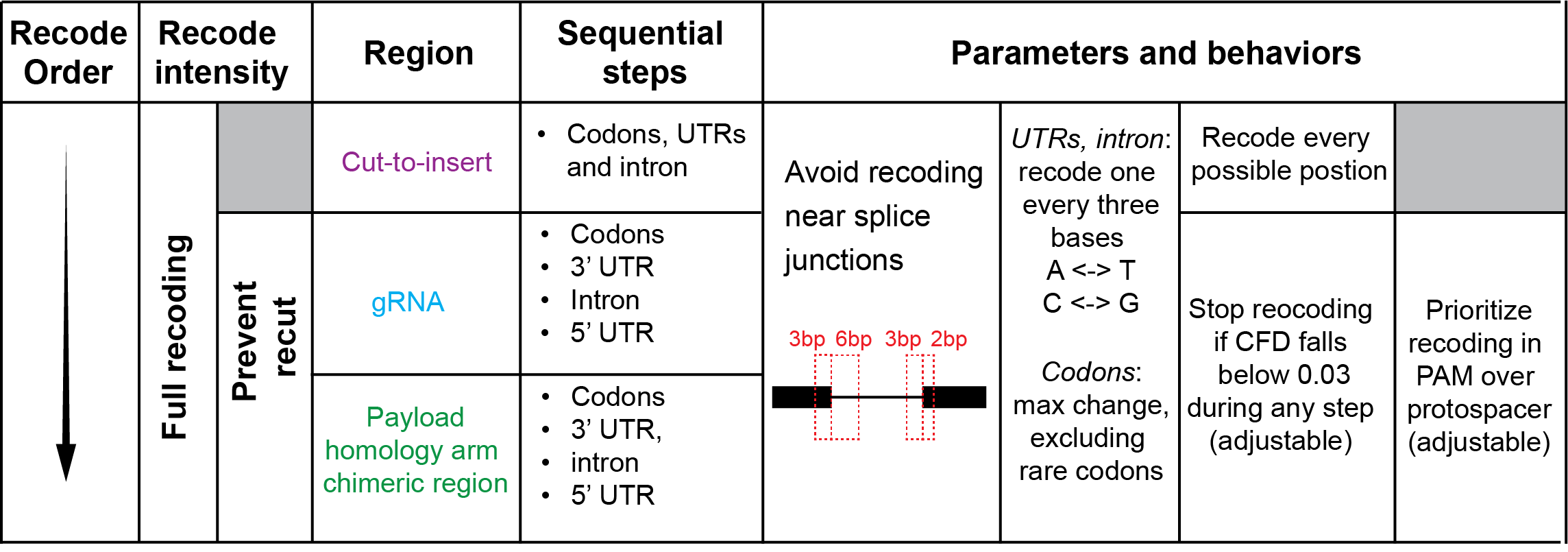
There are three recoding intesities: “full”, “prevent recut”, and “none”.
In “full”, the cut-to-insert region is recoded to facilitate payload insertion. The gRNA or split gRNA (disrupted by the payload, creating a protopsacer-half and a PAM-half) are also recoded.
“Prevent recut” differs from “full” by the lack of recoding in the cut-to-insert region.
Notes
- The Cutting Frequency Determination (CFD) score was created by Doench et al. to calculate the off-target potential of sgRNA:DNA interaction.
Region definitions:
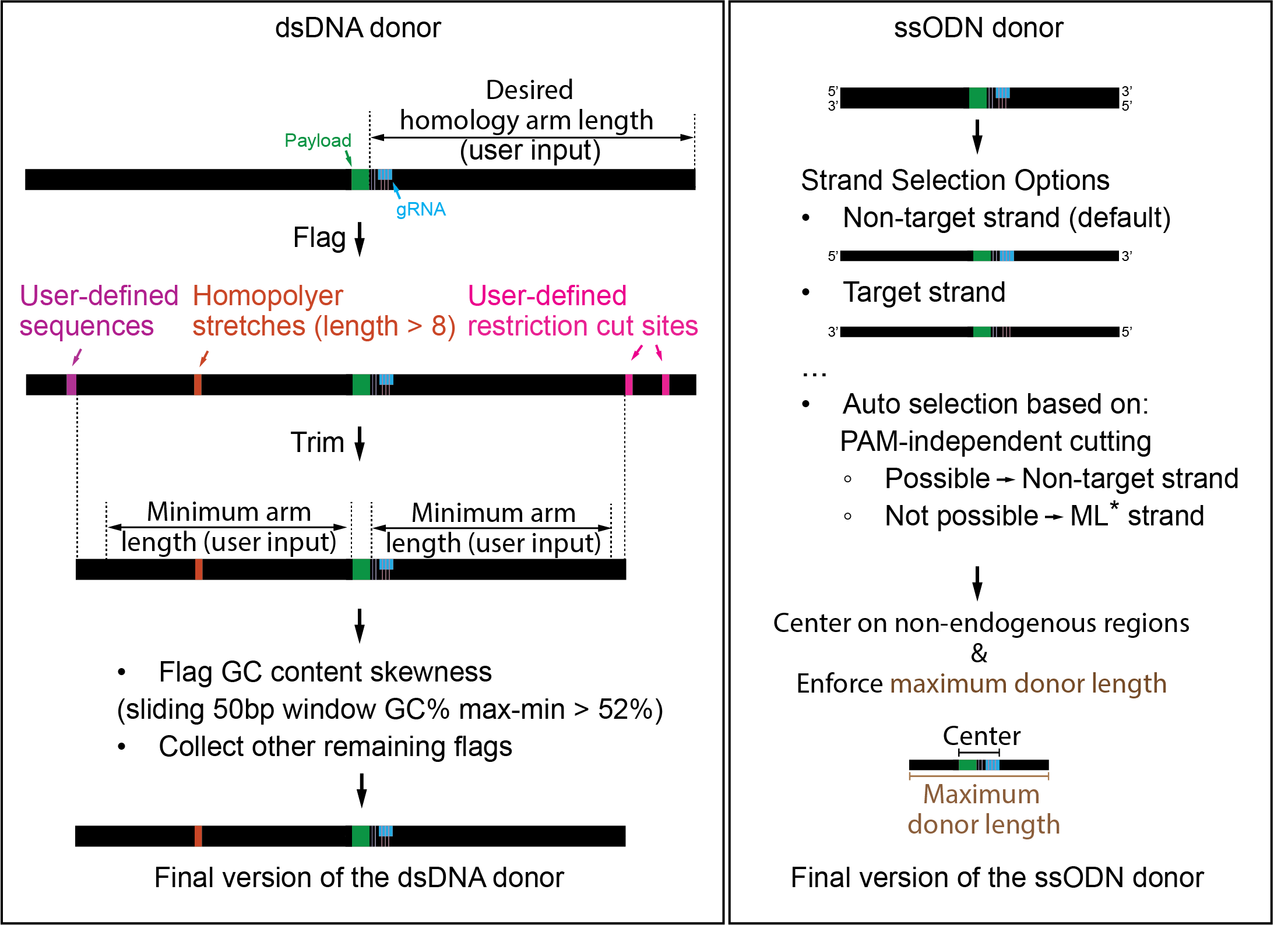
DNA donor processing strategy
After recoding, the DNA donors are further processed, in a type-specific way.
There are two types of DNA donors:
- Double-stranded DNA (dsDNA)
- Single-stranded oligonucleotides (ssODN)